Monitoring
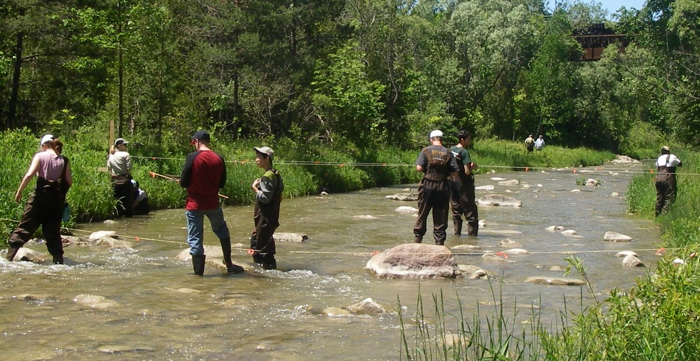
Since 2003, Citizen Scientists have been monitoring the Rouge River watershed at various sites located in Toronto, Markham, Richmond Hill, and Whitchurch-Stouffville in Ontario, Canada.
Rouge River Watershed
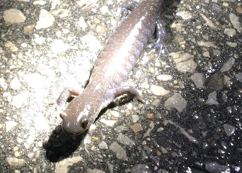
The Rouge River watershed still represents an area with considerable natural resources including areas that support unique, rare and endangered species. The aquatic systems of the Rouge River still support cold- and cool-water communities including provincially endangered species such as redside dace and native brook trout populations. Natural terrestrial habitats support a high diversity of plants and animals, again including those which are rare or at risk, such as the nationally threatened Jefferson salamander, and provincially significant Cooper’s hawk. All of these natural resources lay at the footsteps of the largest urban centre in Canada, the Greater Toronto Area (GTA).
This unique condition offers rare opportunities to learn about environmental protection, conservation and restoration through research and monitoring. As the urban boundary expands northward into the rural and natural habitats of the watershed we are presented with unique opportunities to study the impacts and changes that occur to our natural ecosystems. This understanding can be further developed and applied to future landscape practices, designs, policies and technologies that will lead to improved protection of natural environments, ecosystems and ecological processes. Additionally the Rouge River watershed is an area where significant environmental protection has already been achieved, with the formation of one of the largest urban nature parks in North America, the 41 km2 Rouge Park. It is from within the Park that we are based and where understanding begins.


Aquatic Invasive Species Monitoring
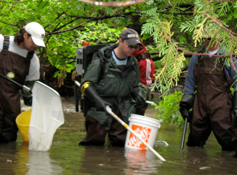
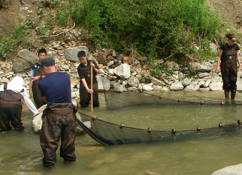
Aquatic invasive species are one of the biggest threats to native species in our rivers and streams. Once they enter our system they are extremely difficult, if not impossible to eliminate. more...
River Ecosystem Monitoring (2003 - 2013)
Citizen Scientists conducted aquatic ecosystem monitoring on riverine habitats from 2003 - 2013. Our monitoring focused on detecting and quantifying changes in the aquatic ecosystem and then relating them back to causal factors, such as temperature, flow regime, and invasive species. Our River Ecosystem Monitoring Program collected data using the Ontario Stream Assessment Protocol which assesses channel morphology and site features, invertebrates, fish and temperature. more...
Ontario Stream Assessment Protocol (OSAP)
The Ontario Stream Assessment Protocol is a standardized method of collecting stream data developed by the Ontario Ministry of Natural Resources. Since data is collected in a standardized fashion it allows for the comparison of data between sites in similar habitat types. It also allows for the reproducibility of the collection of data at the same site to allow for a comparison over subsequent years. more...
Channel Morphology and Site Features
Site identification involves identifying exactly where the site is, how to get to it, the size and the boundaries of the site and its spatial location. Site features describes the on-site physical conditions including the riparian condition, the amount and condition of the riparian zone, human impacts on the stream, and other related point impacts. Channel Morphology is the description of the channel shape and form, and accurately describes substrate sizes and distribution as well as bank stability. more...
Invertebrate Sampling
Invertebrate sampling is the collection and identification of benthic invertebrates to measure the relative health of the aquatic ecosystem. Because many invertebrates are sensitive to physical and chemical changes in the watercourse and they cannot easily escape the impacts of thermal, chemical or organic pollution they are an ideal way of measuring the impacts on a river. more...
Fish Sampling
Fish sampling is the collection and identification of fish to measure the health of the aquatic ecosystem. Fish are more representative of a community or zone than a specific spot in a stream. more...
Temperature Monitoring
Temperature collection helps define the thermal conditions of the water course at the site. Temperature also plays an important role in the life histories of aquatic biota and in some cases determines species presence or absence. more...
Waters Alive Project
Redside Dace (Endangered species) – Examining the life history of this endangered and declining minnow species. We are examining different habitat usage, as well as spawning and feeding behaviour in order to better understand and ultimately protect this species for future generations.
Round Goby (Invasive species) – This benthic fish species is slowly invading the river system from Lake Ontario. We are attempting to identify the current upstream limit of the species and document the changes to ecology over time. We are hoping management agencies can be encouraged to manage this species to conserve native aquatic species diversity.
Rouge Stream and Habitat Summary – Working to summarize our findings from 10 years of stream and habitat work. This examination includes fisheries, temperature, benthic invertebrates and other habitat features.
Vernalis Projects
Salamander Surveys – Looking at forest ecosystem health in two salamander survey plots in two very different forest ecosystems.
Identification and Mapping of Vernal Pool Habitats – Mapping and identifying vernal habitats in the watershed and understanding their ecosystem functions as sensitive faunal communities.
Road Ecology Research
Examining wildlife connectivity in the local landscape; just because two green patches on a map touch each other, that does not mean that the ecosystems are truly connected on the ground. We are researching and examining the impacts of roads on our natural ecosystems, learning about where they fragment and where they allow connections to occur in the landscape.
Insectum
Mothra Project – Moth surveying has already begun, and we have developed a list of species found locally. We are looking to build on this information, learning more about what species we have, and what species may be increasing or declining.
Odonata Project – Previous surveys for odonates have been completed, and we are now looking to relate species presence to habitat type. We are also looking to find new species occurrences and work to protect those that are rare.
The Curator – We are looking for volunteers interested in insect and species diversity. A part of the work will involve taking care of and expanding the reference insect collection. As well, volunteers will help to compile and track species in the Rouge over time.
BBM Projects
Birds – A variety of bird species in the Rouge have recently been identified as being in decline signaling greater ecosystem problems afoot. This project examines our sensitive and declining bird species and what is affecting them.
Bats – What species and abundances of bats are there in the Rouge? What distributions? This project will help us understand bats species in the Rouge watershed and will evolve once some baseline work is developed.
Mussels – Working with partners we seek to better define mussel species distribution, presence and abundance in the Rouge watershed in order to create a regional mapping product.
Special Events
Each year, Citizen Scientists co-hosts two events at the Rouge Valley Conservation Centre in order to raise awareness and understanding about our local ecosystems and species diversity. Experts from different fields of science and ecology are invited to participate and discuss their area(s) of expertise with the public. Volunteers are needed to help organize and run these events.
Rouge Valley Eco Exploration (June)
Fall for the Rouge Affair (October)
Oak Ridges, Rouge Park, Greenbelt World Biosphere Reserve
We are supporting and fostering the development of an Oak Ridges, Rouge Park, Greenbelt World Biosphere Reserve but we need local communities and residents to help as well.


Our Partners
Citizen Scientists © 2001–2010 All rights reserved
Citizen Scientists © 2001–2015 All rights reserved